
Cross-training the Critic Archetype
Thursday March 3, 2022*
We get a lot of Critics who stop by the blog. And I don’t mean people who are unkind or anything—quite the contrary, most of you make a visible effort to be polite.
Still, I get the sense that many of these individuals know that they fall well short of the Healthy Critic archetype.
A lot of you tell me that you identify with four-letter personality types (even if not MBTI), like INTJ or INTP: A big-picture meta-strategist, a contingency-planner, a visionary conceptualizer. Or a hyper-focused analyst, with an explorer’s mind and a gift for tightly-designed procedural logic. You are naturally or automatically able to scrutinize, analyze, conceptualize, and probably also see something for what it could be, which is a core gift of the Critic.
And still others identify with more supportive, emotive, or idealist-existentialist personalities, like the ENFP or INFP, and you may even feel guilty that you are starting to criticize more in life, and idealize less.
And me, what’s my interest in this? Hell, I’m a very active Critic sometimes myself. Personally, one of my long-term goals has been researching and examining this archetype, and finding ways to hack on it, bit by bit.
Sometimes we Critics are caught out by our blind spots, which prevent us from becoming a Healthy Critic. These could include:
- Showing a lack of self-awareness, or a tendency to over-protect the self, as if the harsh critic is just a fragile piece of crystal
- Taking a “Me vs. You” or “Me vs. World” mindset that betrays a severe lack of creativity, or a failure to translate open-mindedness to action
- Dishing out over-emotional critique that goes too far and leaves you exposed as an unhealthy critic
- Responding to critique of your own position with basic, unsophisticated self-protection means only
- Stretching your response to others’ critique into obviously-subjective territory, for example by frantically seeking deference via some metric from your personal background
- Perpetually feeling misunderstood, or underappreciated, associating others’ critique of your work with simple incomprehension
- Experiencing difficulties in navigating the social world at a professional level, especially in the give-and-take sense of relating
- Showing major problems in receiving or contextualizing feedback from others; high sensitivity to candid pushback
Oh and not to leave out my favorite:
- Feeling like a cornered rat, in a world in which everything sucks, and everyone is against me!
So, in this article I will discuss ways to train on & prevent that, among other hopefully-positive outcomes.
Why Cross-train?
As far as I’m concerned, one of the best things you can do for your Inner Critic voice is to cross-train. This involves engaging the Critic archetype in a flexible way, while exploring other, peripheral archetypes as a way to broaden the available perspectives and apply their lessons back into the personal world of the Critic.
Here are some suggestions for other, non-Critic archetypes that provide really great opportunities for training. These archetypal “worlds” are great places, or mindsets, from which to start your journey in cross-training your inner critic.
Tips for Cross-training
As you review the archetypes below, ask yourself:
- How does this archetype communicate with others, especially compared to how a critic communicates?
- How does this archetype push back on critique, when life gets hard?
- How would these perspectives alter my usual approach to critique?
Basic Level – Low-risk
- Student Archetype: Critics can do well to embrace the Student archetype. It is typically a high-empathy zone for the Critic. They can leverage their own ability to learn into a quick energy-turnaround, providing fresh, optimistic grounds for productive engagement with others. It ought to feel Fresh, Breezy, and Easy to learn new things. If a learning topic is proving elusive or challenging, the Student should rely on learning structures, i.e. “Beginner Level,” “Intermediate Level,” etc. for personal measurement and better control.
- Tourist Archetype: Critics should make an effort to get out and explore, letting their walls down. They can “soak it all in,” letting the new setting and its information come to them and make an intentional decision to focus their talent on navigating the destination for a desirable outcome, rather than criticizing it. (This archetype also applies to info-tourism, virtual tourism, etc.)
- Audience/Fan Archetype: Critics should regularly experience things at a level that meets their basic human needs and pushes beyond a bit, into resonance with human desires. This will not only attune them with their audience, but it will also allow them to set a more reasonable performance-bar for themselves and others. It will allow the Critic with clearer access to empathy.
Intermediate Level
- Academic Archetype: Critics should happily reach into the world of academia and theoretical studies. A good critic should be able to be “down to earth,” but they should also be just as happy “up in space” designing and scrutinizing novel, intuitive, theoretical structures. There is some risk here in that Critics may find it difficult to initially navigate from a position of intellectual nuance, as opposed to experiential nuance. Academia requires one to build the capacity to suspend judgment, and to conclude, “I can see what this could be getting at,” instead of, “WTF is this even supposed to mean?”
- Programmer Archetype: Critics can turn to the Programmer to understand how to make scheduled progress into a performance of its own. The Programmer calls on structure directly, or creates it intentionally, like the academic. But unlike the Academic, the Programmer is typically orchestrating a specific outcome by relying on informational inputs. This archetype may seem difficult for a Critic to match in terms of skills, but the mindset itself can be a very helpful one for understanding the constructive world from a less emotional viewpoint.
- Coach Archetype: A good Critic should engage in, plan, and anticipate their own outwardly-focused attempts at encouraging and supporting others, including Performers. They should be able to support and improve these efforts over time. They should also be able to turn this focus inward and coach themselves. A good Coach will never not be coaching themselves with conscious structural support, systems-development support, and ongoing emotional support.
Advanced Level – High-risk
- Performer Archetype: Critics should and do perform. But I think it’s more important to communicate with this archetype, to relate to it, than it is to become it.
- Teacher Archetype: Critics can be drawn into shallow patterns of engagement when filling a teaching role. It is important that they pay attention to their emotions, e.g. emotional eating, emotional communications, emotional boundaries relations with others, the martyrdom effect, etc. The Critic should remember that they are also here to learn, and they should build intentional, if gentle, boundaries around their learning time.
- Personality Archetype: Critics need to be very careful moving into roles that position them as a Personality. These roles expose the critic to constant invitations for flippant criticism coming from an emotionally-overextended state. Critics can learn a lot about this world and its “game”.
In each of these advanced cases the Critic should attempt to define, broaden, and deepen the game, rather than detaching from it.
Well, there are a lot more to consider! But archetypes are a really fun lens on growth. This should provide a fun and interesting start to a lot of you.
Filed in: Essays (53) | Control (112) | Coaching (27) | Energy (121)
2022-202X Ukraine Conflict Notes and Resources
Thursday February 24, 2022*
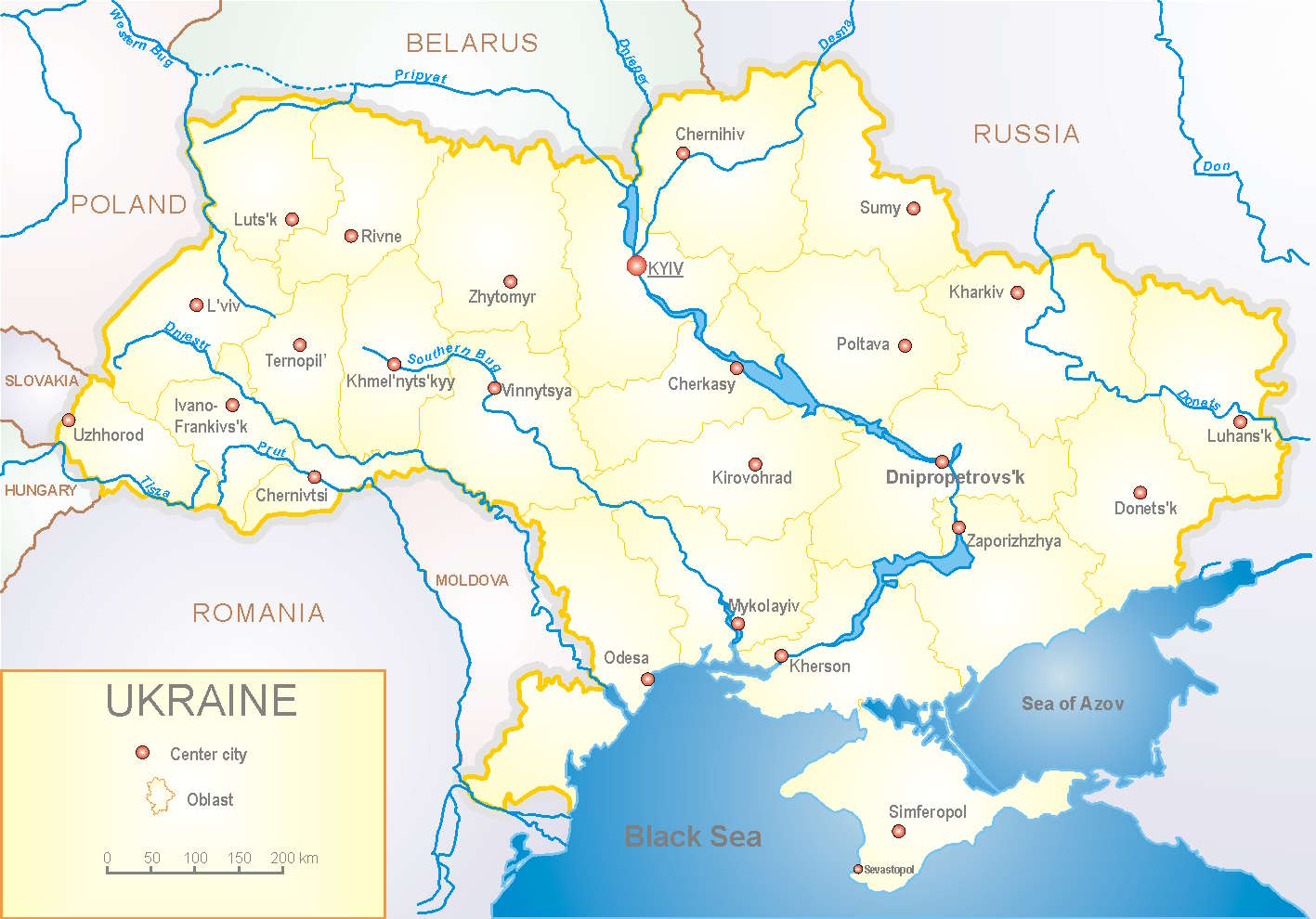
Map image credit: Steschke on Wikimedia Commons
Sending my sympathies and solidarity to my Ukrainian friends—here are some notes and resources for the ongoing conflict.
Note: Resources that I find more relevant or frequently updated are marked with ▲.
Low-bandwidth Version: This page is available in a Low-bandwidth Version (less-frequently updated)
How You Can Help
- Russia – Ukraine Crisis/War – Info and Ways to Help ▲
- Includes donation links and ways to support independent journalism
- List of organizations to support Ukraine’s war relief
- Spreadsheet – See “List” tab
- Support Ukrainian Artists & Purchase or Commission Art – Twitter Thread
- How to Support the People of Ukraine as Russia Declares War
- How to Support the Logistical and Medical services of the Ukrainian Armed Forces
- xena’s Twitter feed also lists various needs
- Use #StandwithUkraine and #StopRussianAggression tags on social media
Monitoring and News Resources
Traditional News Sources & Outlets
- Ukraine: Kyiv Post ▲
- Ukraine: Ukraine Pravda
- Ukraine: EuroMaidan Press – Russian Aggression News ▲
- Russia: Sputnik ▲
- Russia: Pravda
- Romania: Romania Insider
- Poland: Poland Daily 24
- Moldova: MOLDPRES News Agency
- US: CBS News – Ukraine Crisis ▲
- US: NPR : Russia – Ukraine Recap ▲
- US: NPR Picture Show – Contains some UKR photos.
- US: NPR Text-only News Site
- US: CNN Text-only News Site
- Germany: DW Germany News
- France: France 24
- France: The Local
- Other Europe: RadioFreeEurope
- Japan 1: Nikkei Asia
- Japan 2: Mainichi
- China: China Daily
- China Concern: SCMP
- Al Jazeera: Al Jazeera News
- General News: WhatSubject Ukraine News
Maps and General Ukraine Information
- Centre for Information Resilience: Russia-Ukraine Monitor Map
- Live UA Map ▲
- Open Streetmap: Ukraine Bilingual Map
- Kyiv City Map
- NASA Worldwind: Kyiv, Ukraine
- CIA World Factbook: Ukraine
- Basic Ukraine Map
- Time and Date: Current Time in Ukraine – UTC+2, EET. Ukraine moves to EEST (UTC+3) for the Summer starting the last Sunday in March at 03:00 local time, until moving back to EET (UTC+2) on the last Sunday in October at 0:400 local time. Evening in the US is early morning the next day in Ukraine.
Streams
- Youtube: Euronews Stream (France-based news corp., in English, Wikipedia entry)
- Youtube: Agenda-Free TV w/ Live Streams ▲
- Youtube: World is One (India-based news corp., in English, Wikipedia entry)
- Vidgrid: Vidgrid Ukraine News Feed
Social Media Lists and Accounts
- Reddit: /r/ukraine on Reddit ▲
- Twitter List: OSINT (Open-source Intelligence) ▲
- ELINT News: @ELINTNews ▲
- MilitaryLand.net: @Militarylandnet
- Belarusian journalist @TadeuszGiczan
- Account Covering Verification / Falsification of Sources: @Shayan86
- Alternate Twitter Client without JavaScript: Nitter.net
Personal Notes & Log
February 24, 2022, Update #3
Last update for this first day of the page. I am alarmed to learn that Russian soldiers say they were told they were embarking on a training exercise while being sent into combat. If true, this is a tragic violation of their human rights.
February 24, 2022, Update #2
I’ve added additional Twitter accounts and other mapping services above.
February 24, 2022, Update #1
I’ve just started this resource page and hope others find it useful. Here are some of my thoughts as I begin to build it out…
Monitoring and News Plan
One mistake I made in 2014 (when Russia previously invaded Ukraine) was becoming the news-consumption equivalent of a day trader —always on, all the time, no boundaries.
This time I plan to consciously disengage and reengage with the news at specific intervals, typically with minimum 3-4 hour breaks. This allows me to 1) better contextualize the news, 2) benefit from the emotional settling effect, and 3) track the general news story development timeline rather than so many random details.
Another mistake I made was not paying attention to aggressor media, or “the other side’s media”. You can learn a lot by paying attention to their actual words, terminology, etc. This is why I’ve included Sputnik above (the other sites are down right now; I can’t even test them).
Previously I was picky about whether sources were propaganda, and by whom. But these days I care a lot less about “whether it’s propaganda” and a lot more about “what it’s saying, in the context of what the others are saying”. I can handle the propaganda part—that’s really not a problem and I’m familiar with propaganda studies at a personal level.
Donation Preparations
Back in 2014 I made donations to Ukrainian nurses that were delivering supplies to the front lines. I also supported some US-based ex-pats who were gathering materials to send to Ukraine.
This time around, I’m expanding that framework and first conducting a sort of donation-possibilities sweep. When the time comes I’ll update this space. For now, I really appreciate some of the unique charitable efforts I’ve seen. For example, here’s a thread aimed at supporting Ukrainian artists:
https://twitter.com/lukellios/status/1496749878243958784
There is already some absolutely beautiful art talent on display, and this network could be engaged for a lot of really useful reasons, from business to personal.
I’ll update this article as events continue to change.
Filed in: Global Issues (5)
Everybody Needs So Much Time to Cool Off, But At Least We Know About It
Thursday February 17, 2022*
I was discussing this with a valued business partner the other day.
“When do you think I should send this email?”
“Yeah, I think you should wait, send it after the weekend.”
“Me too, probably even send it in the morning. Otherwise they’ll make a silly decision like they did before.”
We know it, they know it, we even joke about it together.
No blame. It’s a known feature & bug with humanity. At least, now it is known, to me. I never really acted like I knew about it when I was younger, and I regret that for sure.
I personally sent some business nasty-grams that were really bad. Justified in this or that way, but I would rewrite those in a second if I could.
But I also sent business normal-grams at times that were convenient to me, and that turned out to be really dumb in a lot of cases. The emotional issue wasn’t on my end, it was more like an awareness issue on my end plus an emotional issue on theirs.
This need for cooling off is such a great human thing to know about. It made me think about my other personal cooling-off periods:
- If there’s a problem I learn about and it pisses me off, I write a draft message now, and then edit & send later.
- If there’s a new thing I learn about and it gets me excited in a good way, the same applies to any notes I’m taking about it. I find SO MUCH ALL CAPS in those notes.
- If I’m shopping for things that are available as limited-time deals, I always note the deal expiration date and come back later after the emotions have cooled off. Knowing the expiration date is a really nice advantage when shopping for deals. When I’m cooled off, I am better prepared to decide—do I need the whole deal, or just part? And so on.
Corollary
I do have some personal corollaries to this. For example:
- If it’s a casual blog post, publish it and then edit down the emotions later if you need to. The risk of not posting at all is higher than the risk of some casual blog post causing alarming issues.
(This is tongue in cheek, but I think there are plenty of situations where cooling off is important, but you have to figure out how the cooling works best for you.)
Building a Perceptive Superpower
It can also be helpful to know about this for other reasons.
Sometimes you hear people say, “ah it’s depressing to learn too much,” but I’d always rather have the awareness, especially if I can execute on it. (Yeah, awareness alone can feel very depressing—always attempt to execute on your perceptions)
After you do this for a while, which is the same as saying “after you pay attention to this new set of perspectives for a while”, you can start to gain something that may even feel like a perceptive superpower:
- You can probably deal with stressful problems with more resilience and creativity.
- You know when and how to avoid raising the stakes for most situations. Raising the stakes is really dumb with very few exceptions.
- Still, you start to understand when and how to raise the stakes, if you ever need to.
You do have to take an executive standpoint on all this. You have to put it to use. But that’s fine with me.
I really like it when this happens—you start to notice how a thing works, then you get some ideas for making the thing better, and pretty soon your stress levels go down, because you’re human (weaknesses) but you’re also human (strengths)!
Filed in: People (74) | Control (112) | Relationships (78) | Feeling (64)
Forward-thinking, Strategic Meta-Blog Changes for 2022
Wednesday February 16, 2022*
After a lot of thought (years now?) I’ve finally changed the title of the blog to M.A.Y.B.E.
This stands for a variety of different things, as you can tell by reloading the page. I’ll probably write the title as MAYBE, leaving out those silly dots which are annoying to type, even if I enjoy looking at them.
This does mean the end of “Marc’s INTJ Blog” as a title for this area of the website. That’s been a fun chapter but it was a long-time goal to update the title to reflect where my focus is, or isn’t—M.A.Y.B.E. lots of things.
I will certainly still be blogging about INTJ stuff, both by nature of my own cognitive functionality and by direct subject matter. So probably no worries there if you are concerned that I may have shed my respect for four-letter type, or Jungian psychology, etc.
But restricting the blog to that topic entirely was no longer making as much sense.
I am guessing the title “M.A.Y.B.E.” could be terrible for SEO, but that itself is also kind of a fun idea. I’m more of a values-first, SEO-second type of person anyway. This is a fun experience for me, not really driving any corporate profits or dreams of public this or that.
I also took down the list of INTJ people you can watch on Youtube, but I will probably stick that somewhere else because it’s been fun to track.
There were also a lot of long-needed front and back-end changes, and tags should be working better than they did before.
That’s it for now—I’m looking forward to “whatever MAYBE becomes” :-)
(The post title above is a bit tongue-in-cheek)
Filed in: Technology (41)
Maintenance Note (Completed)
Monday February 14, 2022*
Edit: The maintenance is complete.
Just a quick note—the website will be undergoing maintenance over the next few days. Some things may seem a bit off for the time being. —Marc, 14 Feb 2022
Filed in:
Self-acceptance is Also Change
Monday February 7, 2022*
Change means stress.
Self-acceptance usually implies change, from not-self-accepting to self-accepting.
So self-acceptance means stressing yourself out, in some ways.
“Accept yourself”? It’s stressful to hear that sometimes.
It’s also vague. (I don’t like that aspect of it at all.)
So, the next time someone tells you to accept yourself, consider telling them, “I don’t need that kind of stress in my life.” I think it’d be pretty funny, anyway.
Plus this is their bitter reward for throwing around pat phrases, maybe.
But also, thinking more logically, watching them struggle with the depth of the equation could be your reward for already accepting yourself, insofar as you haven’t changed.
(Do you see how silly this accept/not accept dichotomy is?)
Filed in: Energy (121) | Publications (44) | Relationships (78) | Therapeutic Practice (148) | Coaching (27)
So, Just to Sum That Up: Summarize and Understand Summaries More Effectively
Friday February 4, 2022*
TL;DR: Summaries are a troubling subject to moi lately. So let me dig into what I’m thinking about that.
Summarizing: What’s Actually Being Communicated When We’re Doing It
When we summarize, this very interesting messaging sub-channel is opened up. If you know to look for it, you can use it to your advantage.
Below I’ve listed some possible thoughts that open the sub-channel. At the top of the list, more & sloppier summarizing is happening:
- (I am summarizing your stuff because….) I really disrespect you and your ideas
- …You always say this
- …I am pretty sure I’ve heard this before, maybe even from you
- …I’m completely out of energy and can’t get into this
- …I can’t devote a reasonable amount of time to thinking about this right now
- …I don’t think you can devote a reasonable amount of time to thinking about this right now (maybe even a trust issue)
- …I am not really sure whether you have everyone’s best interests at heart
- …I want to communicate efficiently because there are a lot of viewpoints to cover
- …I want to communicate helpfully to someone who I can tell needs things to be summarized
With those last few items, less brutal, more gentle, effective summarizing is usually happening.
Who’s doin’ it: Which summarizin’ scenarios suck most?
There’s also this consideration of the scenario, and this makes a big difference. Who is summarizing, and who are they summarizing for?
- Least risky: I am summarizing what someone else said, to another audience that knows them well.
- Mid-risky: I am summarizing what you just said, to a group that is neutral toward you.
- Very risky: I am summarizing what you just said, to you.
- Yikes: I am not known to like your stuff, and I am summarizing what you just said, to an audience that doesn’t like you, while you’re standing there with the full capability of representing yourself.
On top of everything else, those last two can come off like a direct “fix your communication style” and boy howdy that’s not a good way to even wade into that arena.
Being a Gentle-summarizer: Context-compatible Summarizing
The thing is, sometimes it’s hard to tell what kind of summarizing context it is.
So if you’re the one summarizing, I think it can be very helpful…well, and polite…nay, even necessary to offer a bit of context.
Here are some ideas on how to set up a nice, context-compatible summary:
- “Really quick, I’m totally exhausted for unrelated reasons, but I want to register my attention to what you’re saying, so does this sound about right?”
- “So, if I could get your feedback on some takeaways as a total beginner…”
- “I need to take all this in and give it the respect it deserves, but I want to start somewhere, so how does this sound?”
- “I know I have a lot to learn, but to start with…”
Self-Defence against Brutal Summarizing
Sometimes it can help to protect oneself against being summarized. To offer just a few examples of that:
- Question-focus / Object-focus: “Can I ask your (or your audience’s) level of experience with the topic before we get into summarizing? How long have you worked in the field, and are there credentials, or other experiences you can touch on for me?”
- Skip-to-application-focus: “I’m really not sure if it’s helpful to summarize it quite yet. After all, I love to hike in the mountains, but it never even occurred to me to try to summarize how hiking worked before I tried it. So could we try the application or exercises first, see how it goes?”
- Humor-focus: “Just to acknowledge that I spent years studying this from wizards, so I want to say that summarizing the whole of it right now may utterly fail in doing it justice. All wizards know this, and I was warned about people like you.”
- Depth-focus: “It’s very hard to summarize something like this, and I want to acknowledge that directly. There are probably many different summaries, in different contexts, that would be required to come at it with the right attitude.”
- Values-focus: “I know you want to have a high-quality discussion here, so I want to be fair to the details and make sure this isn’t just a battle to share various hot takes. So maybe we could pick some specific contexts or item and discuss those, giving proper respect to the breadth and depth of the topic.”
Why Do All This?
So—why go to all the trouble? Well, I’d say: Do it for you. Seriously, do it for yourself. You’ll win more friends and influence more people, if that’s what you’re wanting to do. They’ll think, “you know who never summarizes me unfairly? That person.” Right?
But you may also save yourself from some big headaches.
And the next time someone summarizes you, you might even be able to think more effectively about what they’re doing. You’ll have a better read on the situation, at the very least:
- I’m being summarized a lot. Am I around a bunch of exhausted people (could be), or what is the context here?
- This person summarized what I said to the group. Is the group looking for a quick, bite-sized offering in what I say next? Well, I’m good at that, and no one speaks better for me than me…
This could open up valuable opportunities to ask for more time, alter your communication style, more closely align yourself with others like you, etc.
Finally, you’ll probably be able to understand your pals better. Always a good idea.
I’m sure there are lots more reasons, too.
A Final Tip
When you summarize yourself for others, use “but that’s another story” liberally, to cover huge swaths of details. Nobody can really expect your summaries to give the full story, BUT, in case they really have such lofty expectations, it can help to directly acknowledge this, and it sets you up for other responses like, “I would love to go there, but really, we need more time for this discussion.”
(Which, for anybody who understands the depth of their topic, is like arranging to have air to breathe…always a good idea)
Filed in: People (74) | Essays (53) | Relationships (78)
As Someone Who
Tuesday January 18, 2022*
Have you ever done the “As Someone Who” or “As A” thing when commenting online?
It’s funny to read these and realize there’s this obvious continuum from “OK, that’s impressive, those are great qualifications” to “hmm, OK, I guess it’s better than nothing,” but just starting the sentence with “As Someone Who…” seems useful to the author, because…
oh god, someone pay attention to what I’m about to say, it’s important!
(I have definitely felt this before)
The continuum itself is always something like, top to bottom:
“As an experimental rocket pilot who flew in top secret aircraft projects,”
“As a jet pilot who has seen combat,”
“As a commercial pilot,”
“As a private pilot,”
“As a private pilot in training,”
“As someone who flies in flight simulators a LOT,”
“As someone who watches a lot of Youtube aviation channels,”
“As someone who has a lot of airplane activity in their general vicinity,”
“As someone who looks up, every once in a while….”
And of course, some kind person will usually at least reply and say “DEAR GOD ABOVE, YOU LOOK UP TOO? THOUGHT I WAS THE ONLY ONE ABOVE ALL OF THIS MADNESS” which is always nice.
What do you do in life? Meta-platforms
Tuesday January 11, 2022*
Is there a more INTJ set of terms around which to re-brand your organization?
https://en.wikipedia.org/wiki/Meta_Platforms
It made me laugh…we get it, you want us to know that you pay lots of attention to Ni…
(Now, about those other cognitive functions…)
Filed in: Ni (42) | Technology (41)
How to More Easily Expand Your Creativity and Spot Limited Thinking
Tuesday January 11, 2022*
Back when I was studying my personal energy levels, one of my earliest experiences taught me an important lesson about low energy:
As we lose energy, we tend to experience a lot of pressure to redirect our focus to one thing.
That one thing could be: One conclusion, one main idea, one person, one solution, one outcome that is near-certain.
We can also say that introversion in general is like this: Where extroversion focuses on “the many,” introversion focuses on “the one”.
Here are some additional, specific singularities of this sort, which I’ve also mapped onto the introverted cognitive functions:
- A single narrative or account that led to this point. “This all started when…” (Si)
- A single relational perspective that describes the characteristics of this point. “This is unfair because…” (Fi)
- A single logical structure or logical conclusion that must be reached about this point. “Conclusion X is a logical certainty because…” (Ti)
- A single metaphor, example, or analogy that maps to this situation exactly. “Let’s compare this situation to a…” (Ni)
For INTJs, I would say that we tend to believe more of 1 & 3 when expressed by others, and create more of 2 & 4 on our own.
(Looking at other types, for example the INTP or ISFJ, I’d say that the opposite is more likely.)
When used to make important arguments and reach important conclusions, these points should almost certainly be given additional time for examination. Why? Because they typically represent a discarding of multiple perspectives and a redirect of total energy into one perspective. This is an important moment of energy exchange, and there may be no turning back, depending on the various structures that apply to the situation.
These actions will tend to work against creativity, in the sense that creativity represents the ability to express oneself “outside the box,” against the approved narrative, counter to the dominant impression, reformative to the known logic, and counter-intuitive to existing analogy.
So: Watching out for “the one” should by definition help one to be aware of limited thinking, and spot new opportunities for creativity.
We can say, “OK, that’s a good example,” or “Fine, that’s very logical,” with the follow-up:
“…and also, I want to make sure we have a reasonable amount of time to consider the various perspectives here before dedicating all of our attention to one conclusion.”
And at this point, there are a lot of really helpful steps that can be employed to celebrate “one-ness” of conclusions, while also bringing in new ideas. The result is often something like “a new, different expression which is still satisfactory or even surprising in its one-ness”, rather than a “separatedness” or a disintegration, which I suppose a really introverted person would tend to fear.
Filed in: Ti (30) | Si (19) | Energy (121) | Ni (42) | Essays (53) | INTP (7) | ISFJ (6) | Publications (44) | Fi (35)