I’ve coached a lot of INTJ university and college students. Many of them suffer for lack of a set of tools that will help them overcome the various problems they encounter. Higher education is not always, as many INTJs assume, a super INTJ-friendly place. It can be, but you will need to leverage your innate cognitive gifts in order to figure out how.
Whether you’re off to university, college, or some other learning institution, here is my toolkit for INTJ student success.
1. Understand How to Go High-level, and Do It.
INTJs are really good at doing things, overall. But we’re really, really good at doing high-level things. Some examples:
Strategic-level critique
Theory design and development
Contingency planning at the level of broad approaches to things
Conceptualization of new thought patterns or thought structures
Using metaphor and vision to drive a creative process
When you approach your studies, or problems with your studies, make sure to pay attention to the high level. If “it just isn’t working,” acknowledge that at a high level. Design a high-level process for diagnosing and addressing the problem.
It’s OK and necessary to go low-level sometimes (design a schedule for the day, rearrange your study notebook, figure out a knot for your shoelaces that won’t come untied as easily, figure out what to do when your prof doesn’t show up for class), but what I want to emphasize here is: Know that the high level is there, and work down from the high level as much as possible. This is where most of your cognitive leverage will be found.
2. Design and Refine Your Approaches
INTJs are really good designers.
Oh, you thought I meant graphic designer? Well, you can be, sure. But what I’m talking about here relates to #1, above—the high level.
At a high level, you can design an approach to your studies by outlining key principles. For example:
Grades will generally reflect my ability to thrive at a course- or major- level.
Grades do not reflect my general ability level.
If I get low grades, I will follow this process:
First…
Second… (etc.)
This is a simple example. You can even go higher-level than that, and write down your general process for transitioning through school to gainful employment. But get something down on paper.
Then, if you stop using it, consider that it needs refinement in order to stay relevant to you and your studies. Go back and update it with what you’ve learned since.
This should become a living process, and as such it will help you design your way through a successful education experience.
3. Interpret Your Interests with Metaphor in Mind
It is completely possible that a given major—for example, a science major—sounds really appealing to you because your subconscious would like you to take a more [scientific] approach to your own life.
Please re-read that until you understand and go “oh.”
If the first part will be difficult, if the actual science major will cause your grades to drop: Try the second part first. Start being more scientific today. Figure out what that means for you.
It is possible to become a very successful person who did not earn a formal science credential and who also conducts as much science as they want, in a field of their choosing. Science is not owned by a credential—far from it.
I can’t emphasize this one enough—interpret your desires as something you can start doing right now, without a formal credential. Only seek formal credentials when you know you can earn them and get good grades. Otherwise disaster can result.
Am I suggesting you’re weak? Is this some kind of under-handed challenge? No!!!!
Does this only apply to science? Far from it!
This may mean undergoing a form of ego-death. You may have to admit that while you wanted to be a physicist as a kid, it’s just not in the cards for you as a major. And that’s often a great alternative to suffering through science courses with C’s, D’s, and a major case of depression.
And once the physics major is in your past? Now that you’re done with school, having picked a different degree? You are free to start doing physics like Jason freaking Bourne—because you are the one picking the targets now, not your professors. Life has a funny way of presenting multiple ways to reach desired outcomes…
4. Interpret Grades with Care
Low grades can absolutely destroy an INTJ’s sense of self-worth.
Have you ever flunked out of a class? Three classes? I have!
Have you ever been on academic probation? Once again, I’m your man! I’ve been there.
Meanwhile, confused friends asked me how that could happen—they knew for a fact that I was “bright and very capable”. Professors wrote me frustrated notes, asking how I could be so engaging in class with questions and theories, and yet flunk their tests and fail to turn in homework. “I feel slightly offended,” one wrote.
I fell into deep depression after that. I didn’t understand what caused all this, but I could see it happening just as clearly as my friends and professors could!
Eventually, I realized that it was a mismatch of my broad interests with my specific task energy. All of those classes and majors and teaching styles, while engaging in theory, did not fit my developed skills and working aptitude in the sense of day-to-day practice. I had hallucinated (see #3).
I had thought that I wanted the literal thing of a computer science degree, when in fact my subconscious was simply drawn toward the theoretical approach to and application of technology, which is one of my gifts.
As a general rule, INTJs should be careful, then, to choose courses where high grades are all but guaranteed. If your grades are high, you are doing well at school. If you don’t do this—believe me, your mental health is at risk. You can still do well overall, but be very careful.
I know one INTJ who disagreed with me here. He undertook a very serious and difficult pathway into a medical career. Each course was a trial of his ego vs. the instructor’s syllabus. Each victory was hard-won.
Later, years into the career, he told me he wished he had picked something different, something more relaxed and theoretical.
You’d think that would be easy to figure out, but a lot of INTJs dive in and select majors or classes that are challenging, because they want to learn, and then they overshoot learning and go into proving. This can cause huge problems. Both “learning” and “proving” can be said to be risky approaches to higher education, in different ways.
Perhaps sometimes you’ll have to admit that you can’t learn anything you want in the school’s way. If you get poor grades at something when you study it the school’s way, try picking it up on your own, outside of school. I’ll bet you’ll do great.
And low grades in a challenging course do not mean that you aren’t learning. They mean that the course was not designed for someone who shares your mindset or experience level. In most of these cases, the most efficient choice is simply to change courses or majors until your grades go up.
Grades don’t reflect who you are, but if they continue to get worse and worse, they can reflect that you’re hallucinating about your prospects in this major or course of study. Blame the process before you blame yourself.
5. Measure Your Overall Pressure & Ability to Respond
Periodically gauge your ability to respond to school pressures on a scale like this:
Response Level 1: I am completely overwhelmed and barely able, if I’m lucky, to get out of bed in the morning.
Response Level 2: I am overworked and frequently feel down.
Response Level 3: I have a lot to do, I’m doing some of it, and I have some up days and some down days.
Response Level 4: I am handling most of my work well, and I have a generally good feeling about my prospects. Down days are the exception to the rule.
Response Level 5: I am always top of things, and down days are almost always due to outside circumstances like a friend’s family problems or a TA throwing up on my notes. I feel like I can solve most any problem that comes up.
You should also design your own measuring devices like this when you can. That’s part of learning to be a scientist—do it.
Once you understand your level, try to design your way through it—and out of it, if needed. See Toolkit item #2 above, for more on that. (Measure, Design, Execute…then Measure Again.)
Personally I was at all five levels at one point or another during university. I’ll discuss one of the biggest complicating factors next.
6. Monitor Your Outside Concerns and the Resources they Demand
Outside concerns include things like:
Your part-time job, and how difficult it is
Your obsession with yoga classes, or volleyball, or lifting, or whatever sport helps you out
Your relationship with your friends or family
Your side-studies, because one major is never enough
Your spiritual pursuits, in or outside of church
Your membership in any clubs you belong to
It is completely possible to enjoy all of these things more than university. I remember when I realized “I’m better at all of this stuff than I am at my computer science classes.” That was really telling. I would go to work and win an award for fixing a computer systems problem, then return to school and flunk a test on data structures. As a result, my work-focus intensified, and I suffered at school even more.
Part of the solution for me was changing my major and changing jobs. For you, who knows what the solution may be. But these factors can all affect your grades and happiness.
You’re an introvert, so it’s easy to blame yourself for things. But you may also need to blame outside concerns in order to make positive progress.
7. Know your Professor’s Personality Type
See if you can figure out your professor’s type. For example, INTP professors are common in higher education. They can sometimes get INTJs really riled up in classes, because they often teach at a slow, methodical, step-by-step pace from the ground up, without making leaps of intuition, or allowing you to make leaps of intuition. They don’t see as much of a point in project-based or outcome-based work. They don’t generally care as much about real-world impact as INTJs do.
And that’s just one example.
Ask about professors or teachers before you sign up for classes. Do some simple comparative analysis between professors.
And while you study, keep a simple dossier. Write down leverage points—tips that help you work around any personality differences. For example, maybe the professor really cares about rote learning, and not much about how much you love learning your chosen major subject of psychology. Many efficient learning methods can be employed here, with a promise to yourself to learn more in depth later.
8. Watch Other Students and Ask them How they are Approaching a Class or Major
In a school setting, watch the other -J personality types. For example, ask the ESTJ how she’s studying for the test. Ask the ISFJ if you can read their latest paper (and give them a lot of compliments—they need this—while looking out for any strategies they used to make the paper longer, etc.)
Then, zoom out a bit with your INTJ perspective. You can’t be an ESTJ, but ask if there’s some middle ground that would be helpful to you. You can’t be an ISFJ, but maybe your papers could stand a little bit less attention to information depth, while conveying a more friendly tone and calling out more references.
Also, when you receive a syllabus, ask others what caught their eye. Occasionally someone will blurt out a strategy that you may have missed: “This basically says you don’t need to turn in any homework if you can maintain high test scores.”
Learn from other students: There’s always something to be picked up.
9. Understand Your Major’s Personality Types and Outcomes
Is your major extremely high-level, like economics or psychology? Or is it low-level, like studio art or dance? Perhaps in a low-level major, you can increase your chances of success by taking a high-level approach—focusing on broad strokes in your studio art, or developing your own theory of dance?
Look at the various personality archetypes and how they play out in your choice of major. Also, look at the students around you. How would you describe their types?
10. Let Yourself Say It: “This Isn’t Working”
Some of the most powerful executives in the world leverage this key principle: If something isn’t working out, make the call and start making decisions.
INTJs are extremely perceptive people. The opposite of perception is judgment. Sometimes we get so caught up in our perceptions about things, in our intuitions, that our judgment process suffers. This judgment process is also known as an “executive” process.
If things just aren’t working—make that call. Don’t worry about blaming yourself, or others. Just start making decisions and writing down lessons you learned after making those decisions. This decision-analysis loop will become a powerful tool for overcoming speed bumps.
At the extreme end, if you’re suffering to the degree that you feel depressed, or even want to end it all—which can happen—wouldn’t it be better just to end school, and give the “real world” a chance? In my opinion it’s always a good idea to leave that option open. Be very careful about forcing yourself to conform to this or that outside structure, just to align yourself with some view you held when you signed up for classes.
11. Reflect after Each Interval
In addition to the analysis I just mentioned, pick intervals at which to reflect. For example, once a week, once a month, once a semester. Ask yourself what you’d do differently in the next interval. Write it down, then try it. If it works, add your new knowledge to your list of tools or your general theory.
Summary
There’s a lot here, and it will take some time to learn and apply. So in the meantime, forgive yourself if things aren’t going well, and pat yourself on the back if things are going great. I hope this can be helpful to you no matter what the circumstances. Good luck in your studies.
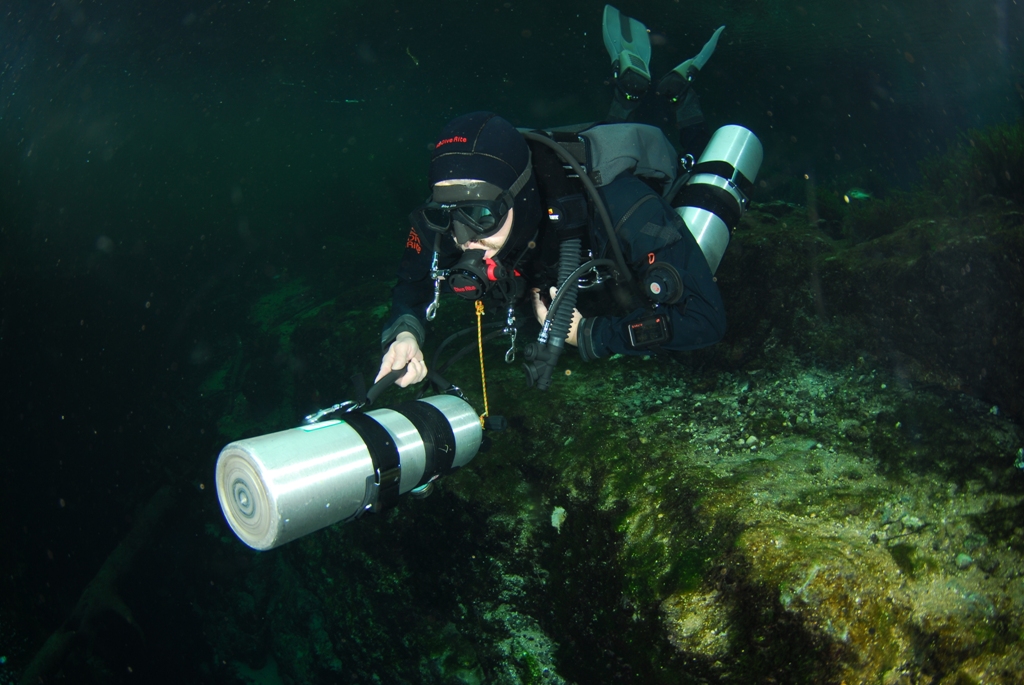
I developed this model, called SCUBA (the origin should be obvious), to help others approach the need to flex their personality type. Flexing type (also described as practicing with others’ cognitive gifts) is a risky process, and we need all the backup we can get.
In effect, when we try to accommodate, understand, and even be more like others, we are submerging ourselves in an environment that could be hostile to our typical state of being. For this reason, SCUBA gear is important.
Self: Am I considering my own interests, wants, and needs during this process? On a daily and even hourly level? You can change your approach at any time, and you are wise to do so when it is needed.
Contained: Have I set boundaries on this process? Do I know when, where, and how I can step out of the process for a break if desired? Do I need to set a timer, or limit the use to a single conversation with someone? Not every dive has to be 150 feet deep. Some dives are 10-20 feet deep, especially early dives. Ask yourself what sounds doable and interesting with regards to a given cognitive process. Difficult functions should probably start with shallower dives.
Underwater: Am I giving attention to the fact that I’m doing something rare and even exciting? That I’m a “stranger in a strange land?” Am I on the lookout for new and interesting aspects to this experience? It’s a good idea to record them and reflect on them. Every function or set of functions has its benefits and leverage points.
Breathing: Am I aware of, and monitoring, my physical condition? My blood pressure, pulse, hydration levels, exhaustion? Some of us push ourselves very hard toward psychological change when we are low on sleep, or otherwise in high-anxiety mode. But that may prevent positive outcomes, or bring about additional negative outcomes.
Apparatus: Do I have the tools and resources I need to do this work? For example, access to helpful people, plans to visit comfortable places where I’ll use my “me” time to reflect? Would special computer software help, or do I need e.g. exercise equipment to enter this mode in an appropriate way?
Example
After some struggles in her chemistry class, Mia, an INTJ high school senior, learned that her chemistry teacher, Ms. Erickson, was a Fe-dominant ESFJ. In contrast to Mia’s intense approach to career planning and her science interests, Ms. Erickson seemed to discourage too much intensity and career focus, and tried to keep the class discussions simple and approachable.
After a few strained discussions in which Mia felt her level of intelligence was being insulted, she decided to try a science experiment suggested by the career coach her mother had hired. Mia would don some SCUBA gear, and learn more about her teacher’s world.
For a few minutes at intervals during each class (Containment to a fixed time period), she wrote a few notes as to how she felt affected by the teacher’s psychology (Self – attention to feelings). She also made notes (Apparatus – tools) about what she saw as the pros and cons of her teacher’s behavior (Underwater – exploration). In addition, Mia increased her level of intensity at a personal level (Self – support of own values), by expanding her plans on paper, and using time outside of class to gather like-minded students and discuss chemistry at a deeper level (Apparatus – gathering outside support).
Finally, Mia also monitored her stress levels during the class. When she felt annoyed or stressed, she took breaks to take deep breaths, drink some water, and even doodle mindlessly for a bit (Breathing – attention to physiological factors). If she felt extra frustrated, she would also write down some fun things she was looking forward to in her next class, or after school (Self – attention to values).
As an outcome to this observing and learning process, Mia identified important leverage points in working with Ms. Erickson. Learning to smile and say “thank you” at appropriate times made it easier for her to approach Ms. Erickson with questions later. She also identified that Ms. Erickson often hinted about things she’d like done in the classroom, rather than addressing them directly. A student who caught on to these things early could help the class earn additional points.
In the end, Mia learned that while it is reasonable to expect that science is taught according to certain standards, individuals may have widely differing expectations as to how those standards are interpreted. Mia emerged from this experience a more mature individual. She also felt like she had learned to take a more scientific view when working in difficult circumstances.
Notes about the model
The key leverage points:
Helping people understand that flexing one’s type is possible
Helping people understand that flexing one’s type is risky
Helping people understand that there are hidden rewards to exploring others’ types
Helping people sustain a goal to gradually work on their flexibility and gain a new level of effectiveness with people
I wish I had conceived this model prior to the time when I was first experimenting with functions like Fe. I overdid that one and ended up suffering through that experience needlessly. The main symptom seemed to be a high level of stress and frustration, which could quickly turn into anger felt toward others.
In my humble opinion, the SCUBA model can help us conceive of realistic goals that push us further toward healthy psychological development, while reducing the overall risk factor.
Introverts: People who protect existing boundaries
Extraverts: People who expand existing boundaries
And:
Introverted Processes for Extraverts: Urgently Protect Newly Expanded Boundaries by Providing Structure and Resources
Extraverted Processes for Introverts: Capitalize on Consolidated Structure and Resources to Expand into New Boundaries
Questions:
Where are there firm boundaries and high walls in your:
(Examples)
Work schedule
Work politics
Job description
Creative life
Planning process
…and where are there loose boundaries or completely free and open territories in the same? In which way do you share those boundaries with others, and how can you expand into them and enforce your own boundaries around them?
How do you rank those territories, in terms of interest to you? Imagine if you were building solid walls next to thousands of square miles of unclaimed territory, simply because no one has charted it yet. What process would serve you best there?
Some of this will sound aggressive, or political, or forceful, or even treacherous, to your intuition.
But the intuition in “resist-new-ideas mode” is also at high risk of overuse as an INTJ’s assessment process…again it’s about protection of what we already have.
Metaphor should assist here. What and where and who are the walls, fences, and castles? The villages? The villagers? What tools does an explorer need?
I use the Geany editor for lots of text editing tasks, and I’ve developed a bunch of little actions within the editor that perform various functions. As per the title here, when I type the word “dicto” and press the Tab key, I get a list, like this:
This is a list of words pulled at random from a dictionary file on my computer. These word lists are extremely valuable to me in creating new mental models or theories, or in refining and adding depth to existing theories or models. Here’s how I use the word list:
I generate a list of 10-30 at a time.
I take the list one word at a time, and ask how the concept of the word—not just the literal word—relates to the work I’m doing.
I keep this very light—if there’s no connection that comes to mind within a few seconds, I’m on to the next word.
For example, take the word “cookbook.” It reminds me that, with regard to my latest theory (it concerns Information and Impression), I could come up with a sort of “cookbook” of applications of the theory. Even a small list of recipes could help make the theory more approachable.
Next comes “fatheads.” This is a magnificent word indeed. What makes someone a fathead? I want to look up the various meanings of this word, and see what concepts hide behind it. But for now—skip!
I jump quickly down to “identifier” (you can see I do not hesitate to waste entire sequences of words). My mind rests on that word, and it brings to mind a question. “What are some identifiers for Information? What about Impression?” These are very good questions that could help add some concision to my theory.
This is an example of the type of simple tooling (see last post) that I try to create. Something that’s easy to implement, yet which could have very high leverage.
I also keep a paper dictionary nearby for the same purpose, but this is faster when I’m already at work.
I think it’s not too big of a stretch to say that Nelson is firmly grounded in the ENTP cognitive model. :-) We INTJs can learn a lot from this:
Broad surveys and outside knowledge are interesting to us and can help us achieve breakthroughs (I’d call this the Ne-Te complex of functions)
Grasping the underlying pattern, the eventual outcome, accepting it for what it is and creating a model for it (Ni-Ti) can help us engage in deeply meaningful work
Some other things to notice:
Ted remarks on people who got stuck/lost making tools. Feynman made this same observation. There is a level at which tool-making and tool-refining becomes a low-leverage effort for a theorist personality. Too much high-leverage theory work is left on the table. What is that level for you? Personally I enjoy making cognitive tools and try to keep my actual hands-on tooling (software design, etc.) as simple as possible.
Listen to Ted’s very formal style of speech. Contrast that with the typically informal INTJ style. There is something to be learned here.
Listen to the way Ted folds in his personal memories of his past, stories of the past, and builds that into a model of who he is, or what kind of a guy he is. We INTJs can benefit from this, as an exercise and as a sort of bridge-building process as we communicate.
Watch for the way Ted is very proprietary about what he has created himself, what he has named it, how it belongs to him, and that he deserves credit for it. He is calmly assertive regarding these factors, even though much of that work is still in the theoretical realm. You can also see this in his Xanadu videos on Youtube. This kind of assertion does not typically come easily for INTJs.
Watch Ted’s periodic open and friendly facial expressions as he connects with his audience, and the way they serve as interludes or transitions that lighten the mood a bit while the focus shifts.
It’s also just a fun video to watch, IMO. His grounding in the broad-ideas-connections work of Ne is clearly biasing his life’s work, but it also motivates his life’s work, and that’s healthy and good.
And here it is! After weeks of nervous planning and perfection and making sure I had the right microphone-arm-positioning, I collapsed on a couch this grumpy morning and spoke into the microphone on my tablet for 15 minutes.
Listen along as I sort out my problems and discuss Jungian cognitive functions like extraverted thinking (Te) and introverted feeling (Fi) in concert with INTJ psychology.
Topics:
Personality type patterns in dreams
Using information from dreams to recover from a difficult or traumatic dream
Being ourselves creates problems!
Paying attention to sensation issues during difficult times
Giving attention to “grump level” or “anxiety level” or “extraversion level” in order to inform immediate decision-making
Communicating with extraverted feeling (Fe)-preferring types.
Planning a recovery from a difficult experience
Basing your plans on your INTJ values and interests to assist recovery
I still haven’t caught up on the sleep I lost (listen to the podcast for context), so, true to form, my day continues to steamroll along in a concerningly extraverted manner. Ah well. But the planning helped for real. I may not feel rested, but I certainly feel like I’ve made terrific progress today.
(Don’t) let me know what you think! I’ll try to include fewer bumps and scratches next time. I mean, it sounds like I’ve got my finger right up my tablet’s microphone hole…seriously what’s up with that? Oh, and my wife even tries to call me while I’m recording. And then sends me a Facebook message. LOL. But it was such a great message, right? Anyway, hope you enjoy the podcast. :-)
When I first learned about memory techniques, I was in university, and as usual, had picked up a self-help book at the bookstore out of curiosity. This book was like a digest of little tools for improving one’s memory. Not bad! I like digest-type books, and a super-memory was something I definitely didn’t have. I had criticized myself more than once for forgetting things. Why? Because it effectively makes you look really clueless and dumb, is why. Especially if you’re around people who remember day-to-day things pretty well!
The more I thought about it, the better the book sounded. What about just memorizing all of my school materials, instead of learning them? After all, that’s what some of my courses seemed to demand. In fact, I wasn’t fully ready to admit that the “learning environment” was so terrifically rote in nature, but it was true. The university as a place of learning was more like a “place of memorization,” in many ways. And I could certainly withdraw from the game, but why not give it a shot, play the game on its own terms! Poof, a course memorized! Grades up, more time for relaxation and fun!
My first memorizer-mission came along very soon thereafter. I had to take a pre-test for one of my film theory courses, and was given a thick study packet and a week to prepare.
The way it worked was, if you didn’t score highly enough on the pre-test, you were not allowed to take the course. But if you did score high enough on the pre-test, you could skip the mid-term exam! Kind of silly at a high level (I mean, it’s this head-in-the-clouds theory course after all), but not a bad deal at a very low here’s-a-carrot level. And what a perfect way to test out my new memory skills!
I read over my new memory book and found the technique that I thought would work. Some techniques require memorization up-front just to learn the technique; those weren’t so great for me. But the techniques that got right into visualization seemed to work really well. The book also advised the use of sensory immersion, like imagining not only the tomatoes and cottage cheese that you needed to buy at the store, but that you were rubbing them all over your body and smelling your skin afterwards, or imagining that they were coming out of the grocer’s nose, first the cottage cheese, and then he screamed in pain as the tomatoes came out too, or whatever. (I mean: It really works, and if you just read that and tried to experience it, you, too, will probably always remember the first two grocery items I ever memorized.)
I sat down to prepare for the test, working my way through the packet. In my mind, I constructed a sort of amusement park ride, the kind where you sit in a cart on the rails, and it takes you through various rooms. Each room had something to do with film theory or theorists. (Levi-strauss was an easy room, very denim, as I recall). It was fun, easy to remember, and I headed into the test on a cold winter morning feeling relatively confident.
As it turned out, I had over-over-prepared. I had all but memorized the entire course. I took the pre-test and scored over 100%, nailing all of the extra credit essay answers by simple regurgitation. Not only would I not have to take the mid-term exam, but I would never struggle to answer a single question in the class.
When I got my test back, word of this exceptional score spread fast, and several of the other students looked at me like I was some kind of an alien from an advanced civilization. We had groaned about the class together, but now it was confirmed—my groaning had clearly been fake, and I deserved some ribbing.
And that was it! My freakish memory gift had arrived. Poof! Level-up.
But there were some consequences.
The downside: It’s still not a core gift. And what’s a core gift?
After that experience, I wanted to memorize everything. But the annoying part was, I still forgot lots of things. And it feels even worse to forget things after you have what you think is a powerful memory.
I forgot my course schedule, I forgot names, I forgot my homework, I forgot about my date with the friends from work and double-booked myself—I was still very much that awful, no-good, forgetful person. And instead of thinking, “OK, so this is not just a blanket fix-all gift,” I made a beginner INTJ’s mistake. I decided: “I need to memorize more.” After all, there were methods galore! The solution for my entire forgetful life was soon to come.
Well, it didn’t work.
As it turns out, improving the INTJ memory is an area that costs us extra CPU cycles. A lot of them. We INTJs typically invent systems that protect us from memory problems, rather than trying to fix ourselves and our poor memory. But we know that systems will never be a 100% solution (this is definitely true), so eventually all of us will have a go at fixing ourselves, in one way or another. And once we really swing hard toward areas like memorization, get ready: Exhaustion kicks in fast.
On top of that, there’s another dimension to it: No amount of memorization will ever seem like “enough.” Combine these two dimensions and you get a complete disaster in the making, if you’re not careful.
I believe my focus on “memorizing all the things” was one of the primary contributors to my complete breakdown as a senior at university. My expectations of myself were too high, and I was moving very quickly out of the territory of INTJ gifts, without even knowing that “INTJ gifts” were a thing that I had. I wore myself out, and when I no longer had legs beneath me, I fell flat. I couldn’t get out of bed in the morning, I couldn’t focus on my courses, and I wasn’t interested in anything at all.
Memory techniques helped me memorize things, sure. But I had no sense of priority, and suddenly gave all of my energy over to the most boring part of my university experience, without even considering what that would do to my engagement and interest levels, and even my sense of identity.
This is what it feels like to over-use a non-core gift. It is not meant for the duration. It’s not meant to support your life in significant ways. Your identity does not, and probably should not, depend on it. You may put some weight on its structure here, but not over there, because you will probably fall right through.
Lessons learned
I gave up on memory for many years after this. I didn’t really know how to set boundaries around it. It was hard, and even annoying to think about, and I wasn’t sure where my interest in it would stop. Would I somehow become a total weirdo who memorized everything? And did I really want that? I wasn’t sure. I just didn’t like thinking about it.
While studying the cognitive functions, I learned that Si, or introverted sensing, is linked to memory and recall. In fact, personality theorist Linda Berens formally refers to Si as “Recall” in her cognitive process model. For us INTJs, Si is the very last process in the hierarchy: Number 8. Difficult to use, always presenting a speed bump, getting in the way, creating problems.
I kept this in mind and once again confirmed it as I studied for the amateur radio exams, attempting to memorize as best I could, all the way through three exam pools of over 1000 questions total. I gradually pushed that memory to the point where I was completely undercutting myself, even thinking “I have no interest in living anymore” as I figured out ways to memorize circuit diagrams and remember a variety of strings of numbers, but understanding, “OK, the test is just 2 days away…I’m willing to endure this level of exhaustion for just a little bit longer.” This is a long way from where I was in university—understanding the why this time around and gaining the ability to self-monitor in the context of that experience really helped me maintain a level of effort even in maximal discomfort.
Like the extreme marathon runners say, it really has a lot to do with race management. I definitely do not encourage pushing your memory skills to the “OK, I am about to give up on life” exhaustion point, but I’ve done it several times now and I’m glad I recognize the way it feels and manifests.
Coming back down to earth after the bigger feats, there is still that fun and exciting aspect. Recall for INTJs is really fun and interesting when it is approached and “played with” as a kind of hobby toy. Low expectations, used in short bursts. I personally find that to be a reliable model for working on, and with, recall.
So this last weekend, I memorized pi to 75 digits. I knew the 3.14159 part, and from those five digits I took it up to first 20, then to 35, and then finally up to 75 digits by 11 p.m. on Sunday night. It’s very subjective and visual; for example the number ‘26’ somehow represents my dad’s aunt Connie, and I can’t figure out why. It all plays out in my head like a movie. But I have learned to accept what my intuition feeds me. In “41971” I saw a WWI-era soviet tank in a winter environment, surrounded by tall, golden grass. In “69399,” a sort of yin-yang (as you might expect from the 69 pairing!) but with a strange organic lumpiness to it, with the colors blue, green, and purple combined in a way that I could never forget. Intuition is so fascinating.
Memorizing to 100 won’t be enough—I’ve already dreamed about 1500 digits, in fact—but it’s a next step. For play.
And still, I’m terrible at remembering things. Maybe I’ve already written this blog post before? I don’t even know, and I can’t be bothered to check at the moment—but I’m OK with that.
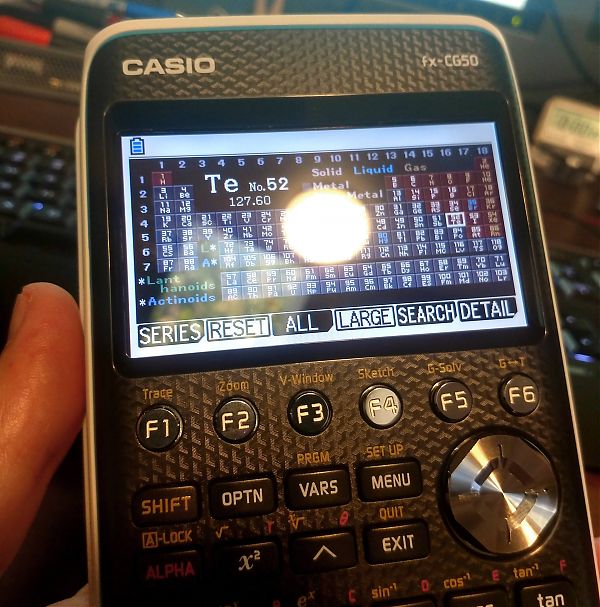
Figuratively and somewhat literally. Hm! This is the Casio FX-CG50 calculator, and maybe it’s a tad superficial, but I am smitten by this feature. Haha. Anyway Te is tellurium, which is “mildly toxic and brittle,” meaning that the element represented by Te is about what you’d expect of someone who over-uses the cognitive function known as Te.
Te (extraverted thinking) is associated with brittleness because it’s broad, rather than deep, casting a wide net for existing solutions, rather than building up a detailed, fits-like-a-glove solution, or engaging in elegant solution-design in the way that Ti, or introverted thinking, does.
Now let’s see…how would titanium represent solution-design thinking (Ti)…hmmm…
I am pursued by an interest in calculators and calculation, and I really enjoy exploring not only the interest itself, but its meaning in my life. I do get very good results from applying things like spreadsheets and other calculations to the various problems I encounter. pats subconscious mind on the head.
Years ago, I had no idea about extraverted thinking, and I didn’t know that calculation could be a natural gift for a person like me. I had no idea that I could really leverage it if I learned it well. At that time in my life I was really tilting hard toward the ESFP mentality: “Be cool, have fun, be artistic and draw on your emotions, make a huge impact above all else.” During that period I associated this kind of calculation-interest with 1) OCD, 2) nerdiness, and 3) boredom in math class. Aaaand that kind of thinking is pretty much one of the contributors to major INTJ life problems. Glad I know about it now! It’s never too late to start.
By the way I’m kind of a sucker for things made by Casio. Yesterday I was drooling over all the latest gear, from Casio electronic dictionaries to the Lesson Pod to the Millenium Falc…err I mean Trackformer Dance Gear. There’s no end to the cuteness.
I’m going to start this post by communicating the simplest model for Fi, or “introverted feeling,” that exists and still applies here.
Introverted feeling is a cognitive function concerned with the question of “what feels good or interesting to me?”
That’s it. There are additional dimensions to Fi, but that’s a really solid and helpful one.
In my observations, INTJs try to use Fi with too much (on average) of a far-ranging approach. “What sounds like a good job for the rest of my working life?” Is an example. There are two problems there: 1) Your interests, needs, and goals not only can change, but will change, and 2) It allows you to put aside the question of “but wait, there are all of these other things that I like.”
Prioritization “wins” too easily for INTJs, and we tend to discard some really interesting and great things while in that mindset. I’ve seen that problem break people over and over.
“What sounds like a good job for the foreseeable future?” is even a risky question. Your INTJ feelings and values are incredibly nuanced and flexible. Nailing those down “once every so-many years” is not going to be enough, in most cases.
Scope really matters when we try to solve problems. During times of stress, you might find that a shorter-term use of Fi is really helpful.
When I detect or foresee a lot of stress in my daily schedule, one of the first things I do is ask myself: “Aside from all the difficult things on my to-do list, what sounds fun today? What sounds interesting? Can I do anything fun while I do those difficult things? Can I intentionally add fun things to my to-do list, and even start with those items?”
Some examples:
Yesterday, while getting my three kids ready for bed, which is an activity that’s full of little sensory tasks like “blow dry Lucy’s hair,” I added in some randomly fun sensory stuff, like listening to favorite songs. (When watching my kids, upbeat music at low volume in headphones often really helps me out)
Today, while finishing up a big project (lots of little loose ends), I watched an old BBC documentary called Being Japanese. This documentary, incidentally, contains one of the best love letters ever, read aloud at one of the most painfully vulnerable times ever, and if you have a Fe-Si or a Si-Fe personality in your life (ESFJ, ISFJ), or another personality type with similar values (even INTP, ENTP, etc.) you should take notes on the contents of that letter (37:10). And also, poor Hiroaki! Wow, I felt for that guy.
Recently while attending and running a huge meeting and feeling over-extraverted, I made a lot of new notes about theories and mental models I’ve been kicking around. I did this consciously, knowing it would help, which is different from “randomly letting my mind get carried away.” Carving out this time here and there during the meeting made me a much happier meeting attendee and organizer.
On other days I’ve invented role-playing games, arranged my office in a better way, meditated over my future, jumped on a trampoline, talked to people in distant locales via ham radio—all things that align with my values and interests.
Under severe stress, I’ll warn you: You’ll probably have to force that stuff into your day, but it will work and you’ll feel better.
Over time, some of those interests and little experiences I listed above will have a profound effect on my future. I love that open-horizon aspect! They may put me in touch with other people who change my life, or perhaps they’ll give me the mental clarity to make difficult decisions. Or maybe they’ll inform new directions in my work and work projects. You never know.
[These Fi-related items are also variously related to other cognitive functions—it’s a bit like trying to pull pumpkin seeds out of a pumpkin. You know what the individual seed is, and where it is, but it’s connected to other stuff too. So this is a very simple model for Fi, but I hope that aspect makes it easier to understand how Fi works.]
So next time you’re doing one of those personal exercises where you consider your “life values,” try going smaller in scope, instead of broader. Ask yourself what sounds interesting right now. What would be fun? Don’t feel guilty if you sit down to plan your entire life out and instead, you play your favorite video game again, or whatever it is. You may find that you actually get better big-picture, long-term results that way. Sometimes living life a day at a time for some period is really healthy and even the best possible option.